
In this section, we’ll explore second-order ODEs, which are important for understanding more complex systems. If you’ve been following along, you know that we have covered the basics of Ordinary Differential Equations (ODEs), first-order ODEs, and how to solve them. Now, we’ll dive into second-order ODEs, helping you tackle more advanced problems and applications.
1. Understanding Second-Order ODEs
A second-order ordinary differential equation (ODE) typically involves the second derivative of an unknown function with respect to the independent variable. The general form you're referring to is:
Here:
-
-
-
-
Example 1: Damped Harmonic Oscillator
This equation describes the motion of a damped harmonic oscillator (such as a mass attached to a spring with friction):
Here,
In this case, the function
Thus,
Now let's see a simple example.
Example 2:
Here,
This is a second-order linear ODE, where
Example 3:
Here,
In this case,
1.1. Why Are These Equations Important?
Linear homogeneous second-order ODEs are essential because they frequently appear in the natural and engineering sciences. For instance, they describe:
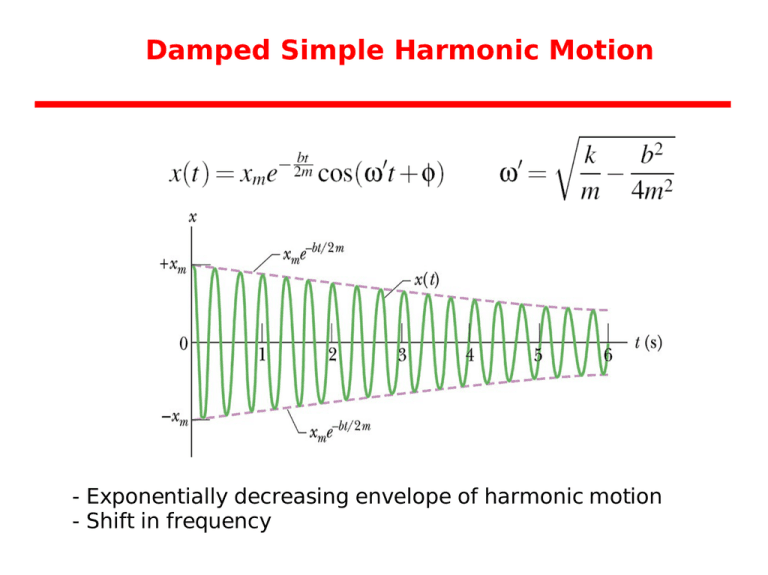
- The motion of a damped harmonic oscillator in physics.
- The deflection of beams in structural engineering.

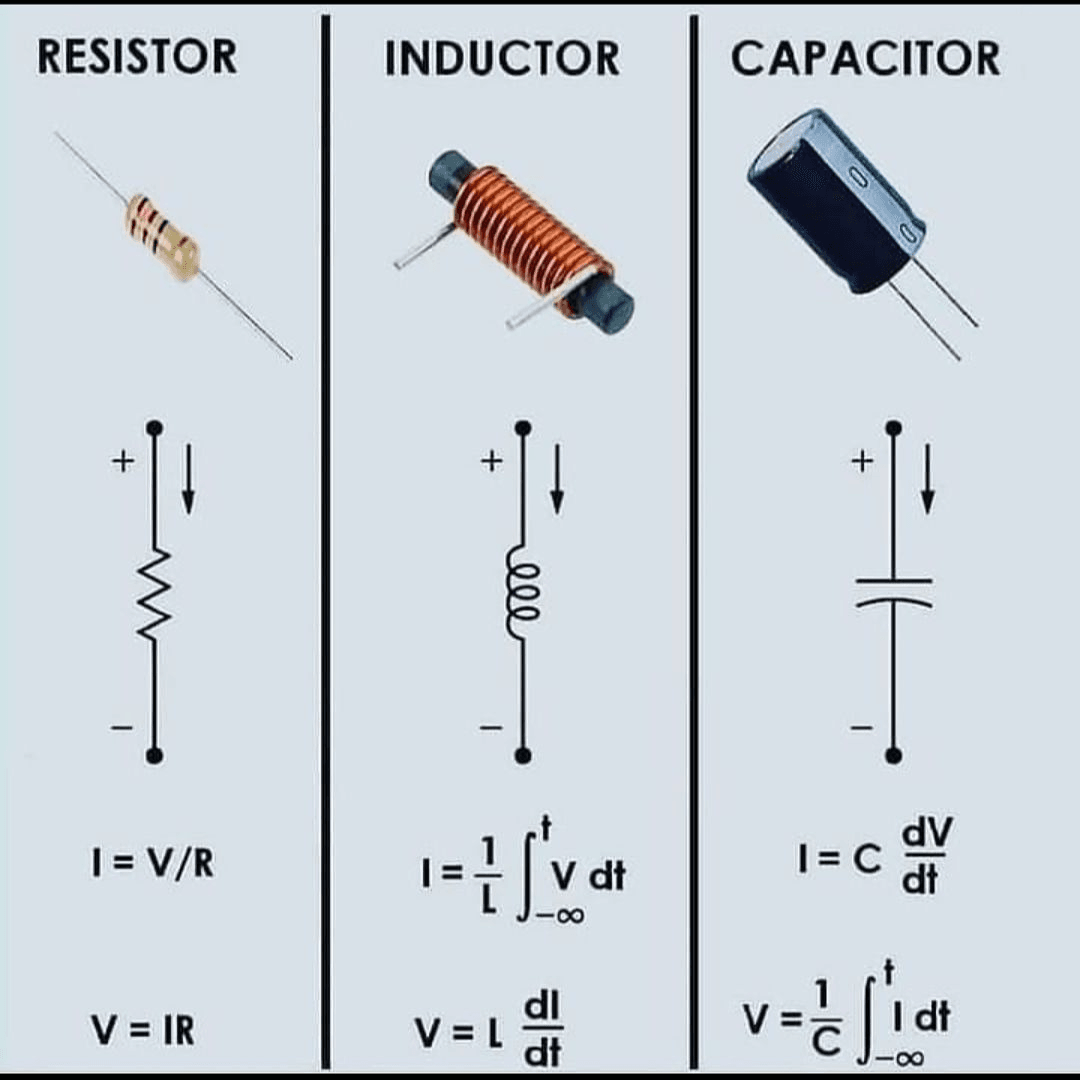
- The behavior of electrical circuits involving inductance and capacitance.
Understanding these equations is crucial for modeling and solving real-world problems.
1.2. The Concept of Linearity and Homogeneity
A differential equation is linear if the dependent variable
where
If
1.2.1. Homogeneous Second-Order ODEs
Example 1:
- Here,
Example 2:
- Here,
Example 3:
- Here,
1.2.2. Non-Homogeneous Second-Order ODEs
Example 1:
- Here,
Example 2:
- Here,
Example 3:
- Here,
These examples illustrate the forms of both homogeneous and non-homogeneous second-order differential equations.
1.3. Solution Strategies for Constant Coefficient Second-Order Linear ODEs
Second-order ODEs can be broadly categorized into linear and nonlinear equations. We will focus on linear equations, both homogeneous and non-homogeneous, and explore different methods to solve them in our next articles.
This article will focus on linear homogeneous second-order differential equations.
A second-order linear ODE has the general form:
In this article, we are only interested in discussing constant coefficient equations where
Example1:
Since the coefficients of y and its derivatives are constants (1, -3, 2) this is a constant coefficient ODE.
Example 2:
Since the coefficients of y and its derivatives are constants (1, 4) this is a constant coefficient ODE.
Example 3:
Since the coefficient of
Example 4:
Since the coefficients of
When solving a second-order ODE, we work with two main types of solutions:
1.3.1. Complementary Solution (or Fundamental Solution)
This is the general solution to the associated homogeneous equation. It represents the solution to the equation when there is no extra term (i.e., when the equation equals zero). This solution comes from finding functions that fit the homogeneous part of the equation.
Example:
Consider the non-homogeneous second-order linear ODE:
Consider the homogeneous form of the second-order linear ODE to get the complementary solution:
The complementary solution for the above non-homogeneous equation is:
Here,
You will learn how to solve these with detailed explanations later in this article.
1.3.2. Particular Solution
This is a specific solution to the original ODE, which includes the extra term (i.e. when the equation does not equal zero). It accounts for the influence of the extra term and gives us a specific answer that works with the original equation.
When considering the same example above
A particular solution for this ODE is
The general solution to the original ODE is the combination of these two solutions:
-
-
Combining these solutions allows us to address both the basic structure of the problem and the specific effects of the additional term, giving us the complete picture of how the system behaves.
Considering the same example as above;
The general solution to the non-homogeneous ODE is the sum of the complementary and particular solutions:
You will learn how to solve these with detailed explanations later in this article.
With this section, you've taken another significant step in understanding second-order ODEs. Stay with us as we move forward to explore how to tackle homogeneous and non-homogeneous second-order ODEs and solve them in the next articles.