Now, imagine a world, for a second, without zero. It sounds trivial, right?
It is just a circle; it is just a blank; it is a symbol that means "nothing." But just imagine taking away zero from the world. Everything from science to music, from history to technology would fall apart. No internet, no smartphones; no "chill down to zero" in the freezer!
Zero is more than what meets the eye.
Zero is a paradox-a riddle, an enigma of a number that humankind took several thousand years to get a complete understanding of. It's the number that bridges existence and nonexistence, splits positive from negative, and underpins entire fields of mathematics and physics.
Curious? Let's dive into the marvel of zero, exploring its wild origins, quirky facts, and the surprising ways it shapes our lives.
Origin of Zero ~ Revolution from Nothingness
The Sumerians - Where It All Began
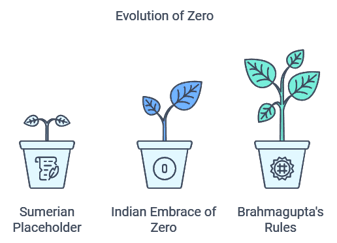
The journey of our story goes back some 3,000 years to ancient Mesopotamia and begins with the Sumerians, one of the earliest known civilizations facing a mathematical challenge. They were working with numbers in cuneiform, and it shortly became apparent that they needed a symbol to indicate when there was "nothing" in a particular place value.
Along came the placeholder!
The Sumerians began using space to indicate emptiness, a crude form of zero. But by this point, zero wasn't really a number yet; it was just a way to show "nothing here."
Zero Becomes a Number - Radical Leap of India
It was ancient India that first embraced zero as a number in its own right.
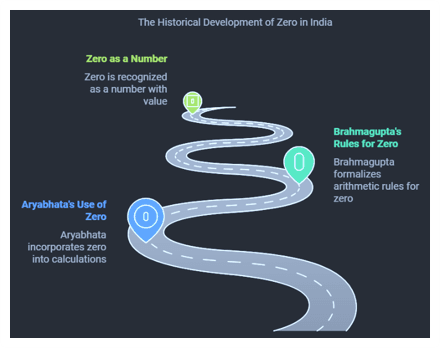
Jump to the 5th century CE, and Indian mathematician Aryabhata began using zero in his calculations. But it is Brahmagupta, an Indian astronomer and mathematician, who would make history in 628 CE. Brahmagupta wrote down rules for arithmetic with zero.
Imagine that: a world where "nothing" finally became "something."
Suddenly, zero wasn't just a blank placeholder; it was a number with which one could add, subtract, multiply, and divide-like sorts, given that division by zero remains a rather tricky business.
The Arabic Influence and Zero's Journey to the West
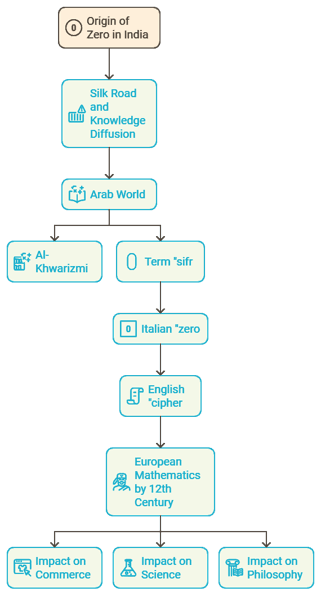
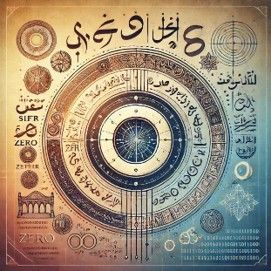
This brilliant idea did not stay in India. Zero traveled via the Silk Road and knowledge diffusion to the Arab world, where scholars such as Al-Khwarizmi, considered the "father of algebra". The Arabs called the number "sifr", a word that means "empty". The word would eventually be transformed into the Italian "zero," and the English "cipher." Zero had migrated into European mathematics by the 12th century, bringing with it revolutions in commerce, science, and philosophy.
Fun Facts about Zero: Surprising Tidbits from Nothing
When we think of nothing, we think of zero. Now, let's look into some fun, quirky facts about zero that show how strange and special this little symbol is.
Zero is the Great Neutralizer
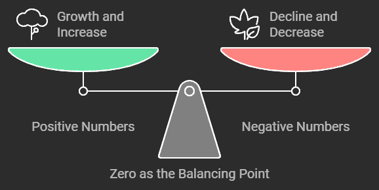
No other number functions purely as zero does; no other number is neither positive nor negative. It falls exactly in the middle of the number line, serenely separating positive from negative. Mathematically, zero performs like a bridge between opposites, a point of balance that both anchors and separates.
No Zero in Roman Numerals
Strange but true! The Romans had no zero!
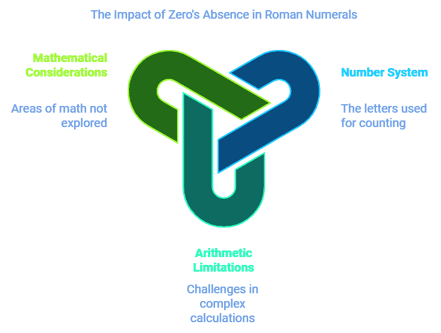
Their number system was based on letters - I, V, X, L, C, D, M, and had no way of showing "nothing." Imagine trying to do complex arithmetic without a zero!
Roman numerals were very good to use for counting but more restricted in the higher ends of arithmetic. This oversight in their numerical system meant that Roman scholars could not consider many areas of mathematics that are so obvious to us today.
The Missing Year Zero
Why is there no year zero?
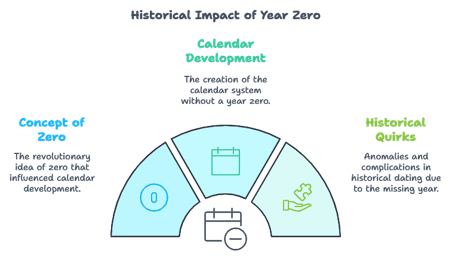
Currently, our calendar jumps right from 1 BCE to 1 CE, which complicates historical math and dating. That's because when our calendar was developed, the Western world didn't really buy into the whole concept of zero, so they didn't even consider having a "year zero." That "missing" year has led to all sorts of historical quirks and anomalies, serving as a reminder of how revolutionary zero really was.
Zero: The Shaper of Language
The word "zero" itself has done its own journey through languages and cultures. From the Arabic word sifr-meaning empty- it evolved to the Italian word zero and found its place in English. Incidentally, "cipher" shares this root, too, showing us that the reach of zero goes right into the realm of code and cryptography. Encryption systems would not work the way they do without zero.
Interesting Facts About Zero: More Than Meets the Eye
Ready for some deeper, mind-bending insights into zero? Here are some little-known facts that speak to zero's power and mystery.
Zero and Infinity - The Cosmic Opposites
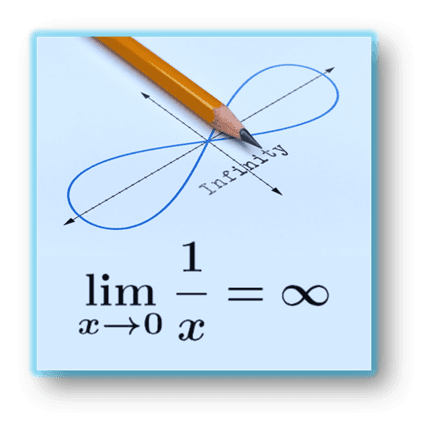
Zero and infinity would seem to be opposites. The former represents nothing, the latter boundlessness. Yet in calculus, zero generally reaches infinity through limits. As you divide by smaller and smaller numbers approaching zero, you inch closer and closer toward infinity. A mathematician refers to this as an "asymptote," a truly mind-blowing reminder of how zero and infinity are two sides of the same cosmic coin.
Zero in Computing: The Back of the Digital World
Without zero, there wouldn't even have been a computer. Zero integrally constitutes the very aspect of computer science. As in, computers work on binary code, which uses two signs, 0 and 1, to create any information. From social media posts to streaming movies, everything in this digital world is constructed from sequences of zeros and ones.
Imagine our tech-driven lives without zero!
Zero is a palindrome and symmetrical
Zero is palindromic-it reads the same forwards and backward.
However, it is also symmetrical, having a perfectly balanced shape. This makes zero unique among numbers, both as a symbol and as a number. Its circular form carries a hint of balance, harmony, and infinity - a fact that gives it deep symbolism in many Eastern philosophies, in which the circle is a symbol of wholeness and life itself.
The Strange Paradoxes of Zero
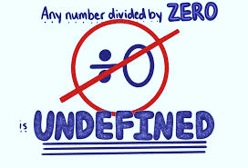
Zero hosts some mathematical paradoxes which even the most resourceful minds try to come to grips with. Division by zero, for instance, gives a value undefined, hence tending towards infinity. This has very wide ramifications in physics and cosmology since zero is used to delve into both the most minute and the vastest reaches of space.
Absolute Zero - The Temperature of Stillness
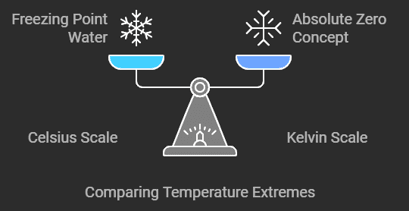
Zero marks the extremes in the world of temperatures. On the Celsius scale, zero degrees represents the freezing point of water. But on the Kelvin scale, zero represents absolute zero or -273.15 degrees Celsius, so cold is a temperature at which atomic particles theoretically stop moving. Better described as absolute zero, a temperature is not only cold, but it is a state of complete stillness; thus, such a state can only be approached theoretically. Hence, this is one of the extreme concepts in physics.
Zero: Number of the Philosophers
Zero is not all about mathematics and science.
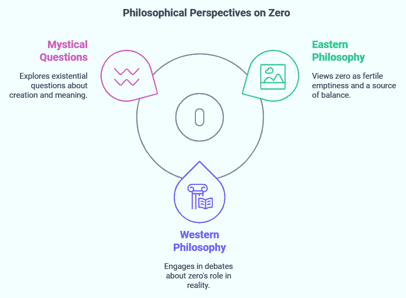
It's a number that even invites us to deeper, almost mystical questions about existence. Most Eastern philosophies rhyme the concept of zero with the notion of "emptiness" or "void", a space of possibilities in which creation begins. Zero, in such traditions, has not been theorized as "nothing" but as fertile emptiness, a source of balance and harmony.
Zero has also had its fair share of philosophical debate in the West. It questions the very reality that we think we know.
The Legacy of Zero: Small but Mighty
Zero has been the unsung hero of everything from commerce and accounting to space exploration and artificial intelligence. Representing "nothing," zero allows for "everything." It is a sign of the possible, an empty vessel waiting to be filled with meaning and discovery. The journey of zero reminds us that sometimes the most powerful ideas emanate from the simplest concepts, the most mysterious from the most familiar.
Zero is so much more than just a round number.
It's a marvel, an ancient concept that wove into the very fabric of the modern world. Without it, we would be lost, adrift in a world with no way to mark the boundaries of time, space, and thought.
Ultimately, zero may mean "nothing," but it's a paradox with infinite wonder, quietly rewriting the very nature of reality.